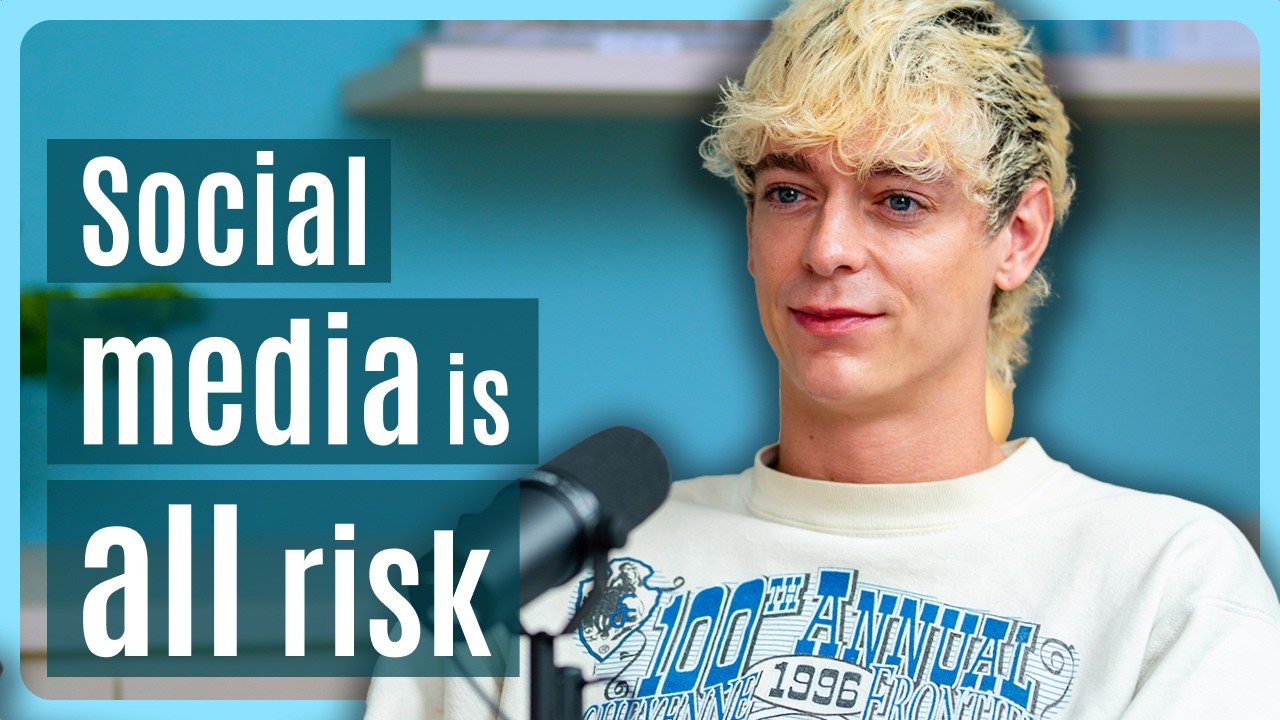
0:00 Matt: When I first came here, I was used to the American way of doing business, and I thought my background working as an engineer on Reels at Meta would be like essentially enough. [...] Japanese business and Japanese people, they really dislike risk. And social media a lot of times is like a brand risk. There's so many unspoken rules about Japan, I'm obsessed with this idea. And the unspoken rule of business often, a large company, if they have a contract, they want to pay some agency to do, they go with the biggest one. You're just supposed to. And people do.
0:26 Unpacking Japan: Thanks for joining us on Unpacking Japan. Proudly produced by our team at ZenStudio, with a longstanding support of ZenGroup. To keep these weekly stories coming, please consider subscribing. It's the best way to support the show and really makes a difference. And now, let's get into it.
0:50 Tobi: Welcome to Unpacking Japan. I'm Tobi, and today I have the pleasure to welcome Matt. Thank you very much for coming. You're an entrepreneur and content creator here in Japan. You work in social media and have worked with social media companies before as an engineer, where you've kind of worked a lot on Reels for Meta. So you have an interesting background there that you're not taking here to Japan, professionally, but also personally. And throughout this journey, I have done a lot of interesting projects as well. So I'm very curious to learn more about you and learn more about what you're doing. But to start, I want to understand what brought you to Japan in the first place. Why did you decide to move all the way here?
1:29 Matt: Yeah. So the story kind of starts when I was a kid. And when I was a kid, the show Naruto used to just be on TV in English. And I really liked that show. And I didn't know about Japan or what it was. And this was like the first time that Hulu had made like video on demand. You could watch it. And so I wanted to like continue the story. And back then, the English dub was not released as fast as the English sub. So one day I hit next on the video. And Naruto started speaking Japanese. And I was like, what is this? What language is this? What's going on? I didn't even know it was an American show.
2:10 Matt: And then I started to find out that the shows that I was watching, I was particularly interested in the ones that happened to have come from Japan. So I thought that was interesting. And I thought they made interesting stories that were like more complex, even for children than Americans did. So it was always my dream to visit. And when I was like 18 or 19, I started an e-commerce business specifically to pay for a trip to Japan.
2:37 Tobi: At 18, you started an e-commerce business to pay for a trip. Was this like the, you could have gone out and worked at the supermarket or worked at the nearby cinema to, where does the idea of starting an e-commerce business at 18 come from to finance a trip?
2:54 Matt: Well, I actually did work at a supermarket also, but I was always interested in entrepreneurship. Even when I was a little kid, like making very bad business ideas because I had nothing to sell. I like ridiculous things. But I was interested in business separately and I saw it as an opportunity to make some money to make my dream happen. So then when I was 19, I successfully did that. And I traveled with my best friend for the maximum amount, 90 days tourist visa and went all over Japan. I had spent like years making a list of things I wanted to do when I arrived. And I did all of them.
3:26 Tobi: What was on that list?
3:28 Matt: It was a lot of like, a lot of Tokyo based things, but also a lot of like countryside things. This was like pre-Japan, super popping on social media, pre-COVID when everyone was locked down. But I did things like Shimanami Kaido and Onomichi and Hiroshima-ken. And I had some of the like most like memorable and personally valuable experiences I've ever had on that trip, which kind of laid the foundation for me to move there later.
3:59 Tobi: So how was it for you growing up and discovering a country and its culture through an anime, building up this desire to go there for so many years, working hard to start your own company to earn money and then finally be here? How does it feel? Yeah. Yeah. Did it meet... In those situations, sometimes people build up a lot of expectations. It should be like this. It should be like that. I want this to be exactly perfect or how I imagined it. Sometimes it matches, sometimes it doesn't. But how did you experience it when you then finally came?
4:30 Matt: I think everyone hypes up trips to Japan, but rightfully so. I think visiting Japan on vacation is like an exceptional experience that almost everybody enjoys. Very few people only come to Japan once. They always end up coming back. And when I first traveled here, every trip after that, I wanted to go nowhere else but here because it was just so different from my home country in so many ways. Living here is like a very different beast, of course. It's not as like rose tinted as everyone would imagine. It takes a very specific type of person that has a lot of resilience towards like...
5:11 Matt: You're constantly like banging up against this like wall of culture when it comes to serious things when living in a country. Things are very different from America and that can be frustrating, but in my opinion, it's worth it.
5:24 Tobi: So you mentioned that you went to some places that were not so popular, especially at the time. And that you got some of your most memorable experience to this day from that. And you brought up Shimanami Kaido. Did you do the whole cycling?
5:37 Matt: So I don't remember exactly like how long it is or what I exactly did. It was the dead middle of the summer in between college semesters for me. And I really didn't have that much money. We were trying as hard as we could to save and still get to see everything we wanted. So I remember it was super hot. And basically like I went to like a katsudon restaurant. And I didn't speak any Japanese. I had kind of learned like konnichiwa and arigato gozaimasu and super basic things. And when I walked out of the restaurant with my best friend, there was a woman and her daughter standing waiting for us. And she handed me an envelope and a bag of waters.
6:17 Matt: And she said a bunch of things in Japanese that I didn't understand. But looking back on it was something like, thank you for visiting our country. Like we really appreciate that you're here in this small town and to see the things that we value and that, you know, is important in our lives. And in the envelope was like sanzen-en (3,000 yen) or some money. She had given me money to rent the electric bicycles and given me water to stay hydrated in the summer. Just a stranger with like an unbelievable amount of like kindness and generosity simply for the fact that I was like trying as hard as I could to appreciate what they thought was valuable.
6:54 Tobi: In the middle of nowhere.
6:57 Matt: The foreigners who don't look like them and don't speak their language.
7:00 Tobi: Wow.
7:01 Matt: So I was deeply inspired by that. I think a lot of my like moving decisions in my life, even within America, were based on those sort of like unbelievable generosity experiences.
7:14 Tobi: So when you spend 90 days here in Japan and you do all the fun, the very touristy things, but then you have experiences like that and that has been your dream for so long. When you go back after 90 days, like what do you think about what's, are you suddenly feeling like you want to go back immediately to Japan or just as a trip or do you already start thinking about what you're doing now, basically moving to Japan?
7:39 Matt: Well, I was still in college. I had just started. So I went back. I finished the next two semesters. And the next summer I interned in New York City at American Express. And I always, maybe I have the timeline wrong, but I always wanted to go back. And I couldn't move there, of course, because I was in college. And I had like very specific career things that I wanted to do. And I did. I went back as much as I possibly could. Within that time period.
8:10 Tobi: So a lot of travels, internship at American Express, you end up working then full-time for Meta, I think. At what point came the desire to move here permanently?
8:26 Matt: So I think I'm a very logical person. There's only been a couple times in my life where I felt like I had some voice inside of me that told me to do something really specific without like a logical, backed-up reason why. And at the time I was living in Austin, Texas, and I was working at Meta, like my third year or something like that. I had this kind of idea in the backseat of my mind that was like, you must do entrepreneurship somehow. That was kind of the reason for getting into it in the first place. And the voice was like getting louder by the day and was telling me, you must move to Japan and do business in Japan. And like on the surface of that, like it's much better to do business in my home country of America.
9:07 Matt: It would be easier, you would make more money. There's less like language barrier, things like that. But I'm interested in solving very difficult problems. And for a very few times in my life, I decided to like fully listen to that voice and do it without an expectation or promise of like what would come. And it's led to like the most like rich, complex, rewarding thing I've done to this day.
9:32 Tobi: So you're working full-time. You have this inner desire to do entrepreneurship and you want to do it in Japan. As you just mentioned, it was like probably a much more complicated challenge than just starting your own startup somewhere in the States. Does this mean that you then came directly to Japan to set up a company here or did you come first and then set up the company?
9:55 Matt: So I initially came to Japan on a language like school visa.
9:59 Tobi: Okay.
10:00 Matt: Because in my opinion at the time, that was like the easiest way to get there as fast as possible. And I felt that I would like figure out the business on the way. So I did establish my company, but there's lots of like complex Japanese rules and things like that. Eventually it was just fine. And now I'm in Japan just doing business. So I ended up stopping language school.
10:22 Tobi: Did you know at the time already what business you wanted to open up here in Japan?
10:26 Matt: Yeah, that's the weird part about the voice. It didn't tell me like kind of specifically what to do. So I tried something. And one problem I was really interested at the time, which I ran into a lot at Meta when I was working on Reels, is it's kind of merged with my current thoughts. But I think the only two really important things in the modern economy are like AI and social media. Social media is just attention in technological form. And I'm really interested in how people are able to like monetize social media specifically, monetize attention. So I wanted to build a business that helped people sell things that they wanted to make using their platform. Whereas most social media influencers make their money based on advertising for other businesses.
11:12 Matt: But I think I see social media, people who do social media creators, as artists in some fashion. The primary way that they're monetizing is by changing their art to some sort of sponsorship thing. I wanted to make a way where they could monetize without having to change the thing that they want to make. They can make their own products and sell them kind of automated. So we build systems to sell products through automations from social media.
11:38 Tobi: And so this is kind of the birth of Hanami Social, I imagine. So this is a company you know run here in Japan. Is this a problematic that you wanted to solve specifically with regards to content creators or artists that are based here in Japan? Or was it just a matter of being based in Japan as a company because you wanted to live here and set up the business here, but serving people worldwide?
12:02 Matt: Yeah, it would be like much more strategically beneficial to have this business in America. And we do have the business in America as well. They were kind of separate things. So the result of that is we've helped a lot of people, both Japanese people, influencers. We've helped Japanese companies, American influencers, American companies. But a lot of the common thread of the initial clients were like something to do with Japan.
12:28 Tobi: So when you start looking into this,
12:31 Tobi: Did you start noticing a difference between how social media is used and created here in Japan versus what you were maybe familiar with in the States, especially since you've worked on Reels for Meta? And I'm not sure, but it's just a guess. The whole approach of Meta when working on the algorithm and changing things is from, let's say, a Northern American perspective with a Northern American consumer in mind, generally speaking, the algorithm doesn't change by country as far as I know. So when you then come here and you start seeing how people use social media in Japan and how they interact with social media, did you notice big differences that made you maybe reconsider as well what you were doing with Hanami Social?
13:16 Matt: There's huge differences. Just like if you compare America and Japan in any way, you will notice massive differences. They're kind of polar opposite countries in a lot of ways. When I studied psychology when I was in high school, there's like a graph of individualism and collectivism from a psychological perspective. Japanese people are the maximum collective country in the world, and Americans are the maximum individualist in the world. But with respect to the algorithm, the algorithm is just like a representation kind of mathematically and statistically of human attention, what people are interested in. So depending on who your audience is, that can mean a lot of different things. And it changes over time as people change what they want to see over time.
13:59 Matt: So the algorithm specifically itself is not like built for American audiences in particular. I think that would be like an unwise business decision on Meta's part. But Japanese people who make content for Japanese people, the things that do well are what Japanese people are specifically interested in, which can look a lot different from what American people are. A lot of media differences. If you watch Japanese TV, there's like 10 boxes in the corner with people like facially reacting to everything so people know how to match it. Very unusual. A lot of like, you know, big, loud text, breaking design patterns that Americans, you know, often follow.
14:39 Matt: But I think that's interesting.
14:42 Tobi: And so this translates, what you see on Japanese TV translates into how people use and interact with social media here.
14:47 Matt: Yeah, it's difficult to trace back why. Like do people make media like that because that's what they see on TV and that's what they're used to? Do they make it because that's what people are interested in? Is that just like a self-fulfilling kind of cycle? I don't know, but it's interesting.
15:01 Tobi: So then for you and your work and this idea of turning the work of creators into something that can help them basically monetize themselves without selling like ad space on their own platforms, what was the impact of these differences and how they are being used?
15:21 Matt: Yeah, I would say the fundamental things don't actually change that much. So the way our automations work is it starts with like a comment on a short form video. So short form organic videos are meant to distribute infinitely based on someone's interest in them, how interesting the video is. That's a very powerful thing to use if you know what people are interested in. So like an advertising system, for example, you pay money to show people something that they may not want to see. With organic reels content, you pay nothing and you only win if everyone likes or is interested in what the video is. So you can technically get attention for free. It's just like a skill gap.
16:01 Matt: But advertising systems monetize really well. You can push someone towards a website and sell something with a purpose. Social media never had that really. A few years ago or however many years ago, Instagram basically made like DM automation possible.
16:18 Tobi: Yeah.
16:18 Matt: So from a comment on a reel into like an automated DM flow using AI, all these different options, that became the same as like an advertising system that has some sales outcome. So I saw that and I thought, I bet I can build something that works exactly like an advertising system, which is really popular in Japan. They really understand advertising systems. They don't really understand organic content. But I can build something that is essentially the same outcome for like 10 times less money. So I did.
16:52 Tobi: Interesting.
16:54 Tobi: Did you, is this something that you've discussed and mostly with Japanese clientele or foreign clientele? Because what I'm curious about as a follow-up to this is how do you explain it to them? Because doing it in English with let's say American audience or whatnot in the way you've just done to me is pretty straightforward. But you also just mentioned that in Japan, they seem to have a very good understanding of advertising systems, but not so much of how to utilize organic platforms.
17:26 Matt: So you just brought up something that was like extremely astute, which is like the way you describe things, depending on the level of complexity, is very different depending on who you're talking to. If you're talking to an American versus a Japanese person, business person, very different pitch. Their understanding is at a different level, what they know to be reliable. And then there's fundamental things that are different about Japanese business and Japanese people, primarily that they really dislike risk. And social media, a lot of times, is like a brand risk, being loud and different and unique. And like, all of those traits are what work on social media.
18:10 Matt: That's very antithetical to what Japanese companies want to do. They want to build like slow, steady, reliable growth.
18:16 Tobi: On the reliable part as well, I would say social media, you mentioned that it's a skill gap whether or not your reel is successful, but it still feels like until you post your reel, you never know if something will actually perform or not. So for companies, that's a big risk to invest into social media because they cannot really measure a certain number of clicks or a certain number of cost per click ahead of time. They can only see this after the fact.
18:43 Matt: That's a major business issue in Japan. With American business people, we show them case studies and sets of data to get them to sort of believe or trust based on history that it may go this way for them. So we do as much as we can to estimate. For Japanese businesses, there's always an element of risk in business. That's just what it is. And the more risk you accept, the more reward is potential. But Japanese businesses hate risk and they want to hedge it as much as possible. The way that Japanese people culturally hedge risk is personal relationship. The way that Americans hedge risk is data and like background. That has been like an extreme challenge.
19:25 Matt: So at the end of the day, you're right. No one can tell the future. We don't know if we can make amazing social media videos for you that perform insanely well for your business. We have the historical data. Japanese people are less trusting of that. They would rather get to know you personally and kind of do business in the old style
19:41 Matt: 1950s American way.
19:43 Tobi: So let's go back to when you came here. You first are in language school and then you have this idea of like, okay, you can probably create this automated system to make some changes in social media that empowers creators and also gives companies an interesting way to promote themselves in a more organic way. Where do you even start with this when you're here in Japan? You go to language school every day. Like what's your starting point to actually set this up?
20:05 Matt: Well, I think an interesting key piece of it is I didn't come to Japan with the intention of making content of my own. And so I was having lunch with a friend of mine, [inaudible], who's like...
20:17 Tobi: He was on a podcast as well.
20:18 Matt: Yeah, sure.
20:19 Tobi: Two and a half years ago. It's been a while.
20:20 Matt: He's amazing. I'm like a huge fan of him as a person. But he... We were just having lunch and talking and it just happened that the person that was sitting next to us in this restaurant was [inaudible].
20:33 Tobi: Okay.
20:33 Matt: And so he's kind of the original creator of like the street interviews of Japanese people and Americans in Japan and other people.
20:40 Tobi: But you didn't know each other.
20:41 Matt: No.
20:41 Tobi: That was pure coincidence that you and [inaudible] and [inaudible] were sitting next to each other.
20:45 Matt: Yes. And they knew each other at the time.
20:47 Tobi: Okay.
20:47 Matt: So they start talking. I introduce myself and he says, hey, I'm actually making a video about Americans in Japan. Would you want to be on it for a moment? I'm sure, of course. And so I went to that and he asked me some questions. We spoke Japanese. We spoke English. And a clip... I had something really useful like that I wanted to say. And so he gave me an opportunity to say it, which was I think there's a really like optimal way to move to Japan cheaply. And I wanted to give that to people because I feel like I found a secret that I wanted to share that could really help people and be useful. So I did. That was clipped. And that video got like 50 million views.
21:27 Tobi: That's a lot of millions.
21:28 Matt: Yeah, it's a lot. Maybe even more. It's been reposted many times and stuff like that. But I still run into people two years later that remember that video.
21:37 Tobi: Wow.
21:38 Matt: And the comments that I got on that video were really complimentary of how like practical and immediately useful it was and how like not gatekeeping it was. And they said that they wanted to see more. And I thought, well, like maybe I can just be like practically useful for people. Maybe I can take these things that I've struggled with and like figured out and just give them away and just be helpful. So that's what I started doing is making videos that I thought were like immediately practically useful to people in the context of Japan and sprinkling in like what I thought was like particularly interesting about the cultural like nuances and like behavioral differences, sociology, psychology of Japanese people versus Americans. And so I did that and I built this automation system for my own account.
22:21 Tobi: Oh.
22:22 Matt: And it worked exceptionally well. And I thought like many people can use this. I think this is actually the optimal way to do it. It all kind of coincided at the right time.
22:34 Tobi: So a real or another platform or another person's channel kind of kickstarted your own content creation in a way and that gave you a place to test your ideas and see whether that worked or not.
22:48 Matt: Definitely.
22:49 Tobi: When, what were some of the indicators you mentioned it worked exceptionally well? Like by what did you measure or how did you know, okay, this is working? This is something that I can expand on.
23:01 Matt: Well, I think there's a bunch of different types of content. There's, especially in short form video, there's like entertaining, entertainment content. In my particular domain, it's educational content. There's a little bit of entertainment like sprinkled in, but the most interesting thing about educational content is you can have some sort of like call to action or outcome at the end of the video where you give someone something valuable. And because they want that valuable thing, if you condense the amount of work that someone needs to do, whether it's like a recommendation of what to do in Japan to have a particular type of experience, some cultural guide or language guide, whatever you want, in my case, people will action on that in order to get it for free. And through that action, you can start this like automation system and you can get like marketing data, you can get email, you can start talking to people and build a community that you have forever, never leaves.
23:51 Matt: Advertising system, you stop paying, it stops. So I thought that was particularly interesting. And I think one of the first videos I used it on, I basically like provided some sort of free guide and I got like 30,000 comments or some absurd amount.
24:08 Tobi: 30,000?
24:09 Matt: I don't know if that's the exact amount. It really escapes me, but I built like a massive email list of people that were particularly interested in what I had to say. So I thought that was a massive advantage for like a business context.
24:21 Tobi: It's one thing that it works for you. It's another thing to sell that idea then to others. How did you kind of expand from just having a system that works for your own, for your informational and educational content on Japan, to having, whether it's another creator use your system or having companies willing to pay to benefit from the system?
24:41 Matt: Sure. The truthful answer is like, I did not know if it would work, but I was pretty confident in just as like a feeling and intuition. And so we were able to convince some people to pay us for it and it did work.
24:53 Tobi: You've been doing this now for a couple of years and what I'm curious about is what is the practical impact on this from the consumer point of view? Just before we started recording, we discussed a little bit that now Japan itself as, how can I phrase this, is used for content extensively, perhaps too much in every niche possible. In a way to some people, Japan has become content or a source of content, which in turn probably distorts a lot of people's perspectives of what is, let's say, reality on the ground. So when you start working with creators and you start pushing, automating, optimizing content, what you see is a change that it's creating for how the viewers interact with Japan-based content and the perception it creates of the country.
25:48 Matt: Exceptional question. I've had a lot of thoughts here, actually, because I think everyone that makes content in the creator space often gets comments, actually a very small percentage of comments, that are something like, don't ruin Japan, don't bring a bunch of tourists to this small local place and ruin it forever. But I think that's a very not well thought through argument, really. I understand where it's coming from and I think there's validity to it. But in my case, I spent 90 days in Japan the first time I came. I had experiences that I'll always have with me for the rest of my life. They were incredibly memorable and deeply meaningful to me. I want more than anything for people who come to Japan to see that and have that.
26:32 Matt: You can come to Japan now and you can do Mario Kart in the street and whatever and treat it like a video game, but you won't walk away with anything lasting and meaningful in your life. And so my goal, that's my ideal. I fall short of it sometimes, of course, but my ideal is to have people have that same experience that I had. And this idea that like you should gatekeep it and keep it separate and keep it for only your friends, I understand where it comes from, but I feel like the fundamental reality of that is like a personal weakness and I don't feel that I'm like deserving of beautiful experiences more than anyone else is.
27:12 Matt: And just because someone knows more about Japan or whatever it is, that doesn't make them less, more or less deserving of these amazing life-changing things. It is a beautiful country for a million reasons and I really want people to know that and see it for what it is. It's not a perfect country, of course. So I do things like I have spots that I really value in my daily life that I go to a lot. An izakaya or something or a friend that I've had for a long time. For example, there's an izakaya owned by a man I met nine years ago when I visited Japan for the first time. It's a really small local izakaya, almost all Japanese people. He speaks zero English. First time I met him, I also didn't speak Japanese, but now I do and we're long-term friends.
27:55 Matt: And I wanted to make a video about it because I think it's incredibly unique and from an American perspective, bringing more customers to his business is like net good. He makes more money, he's a great person, maybe he can build more beautiful experiences for people. But he didn't want me to. I asked him if I could and he said no. And instead of getting like offended about it, I started thinking about why that might be the case. And there's the element of difficulty of not being able to speak English. And I think culturally the izakaya, the local neighborhood izakaya is like an institution for local people to de-stress and to communicate and to shed the tatemae of normal Japanese life. And he just wanted to protect that simply.
28:36 Matt: And I think that's okay.
28:39 Tobi: I feel like you brought up two sides or two parts of the discussion in your answer there. One being basically the idea of gatekeeping or not gatekeeping information to other people that would like to visit Japan or experience Japan and get some of those memorable experiences, which in a way, back to this individual versus collective point that you brought up earlier means it's very much focused on the, this Western approach to like it's their experience of Japan. And then the other side is how the locals experience this influx in people and also how they experience their expectations of what they're about to find.
29:20 Tobi: And when you look at the social media landscape now of Japan, since you've, you work in the field, where do you see, do you see its balance? Do you feel like it's leaning too much towards, kind of consuming Japan as content as a place, or is there enough balance to kind of bring these different perspectives and give people an opportunity to enjoy Japan, but in a more, maybe a sustainable way?
29:53 Matt: Yeah. Yeah. I think there is room. I think like Japan is always balancing these two ideas, which is like, should we open up our economy and immigration to be like economically healthy for longer? Or should we kind of close it off, tighten it up and keep our Japanese-ness, but maybe have economic difficulty? And I don't, I'm not an economist. I don't know if that's like the actual landscape. It's probably more nuanced than that. But they, I think they started with the first one and they're like moving much more towards the second one as much as they can.
30:35 Matt: That being said, there are areas of Japan that are much less economically strong than Tokyo for sure. There's amazed, some of those like authentic real experiences, the quantity of experiences that I've had outside of Tokyo has been much higher than in Tokyo, despite me spending almost all of my time in Tokyo historically. So there's a bunch of amazing life-changing things, people, food, everything outside of Tokyo, outside the big cities in the inaka. And so I guess my long-term vision, which I have not put together in a, in any real way, is to help people understand that. And I think there are people that respect Japan.
31:18 Matt: They want to understand it deeply. They understand the necessity to match the environment and not cause disruption, which I think is very smart and honorable as a tourist. And I think if those people went out into the countryside and got a firsthand experience experience in with those people in those communities that would be mutually beneficial for both the Japanese people that live there, their economy, and that person themselves,
31:43 Matt: Their personal development.
31:46 Tobi: So if we then go back to content creation, kind of what you're helping people with, you described the algorithm as basically just, where people's attention is at the moment. With the creator's goal being to increase their views, increase their number of followers, subscribers, because that's how they make a living.
32:07 Matt: Sure.
32:07 Tobi: And the company and the advertisers goal being the same because the more those numbers go up, the more potential revenue they will make.
32:17 Matt: Sure.
32:17 Tobi: They are all incentivized to make content that will basically scream attention. And those headlines maybe tend to, skew towards the extremes, something very unique, amazing place in Japan, a top secret, nobody's ever been here before kind of content that may people want to click and watch. Do you feel like this is then distorting the view people have of Japan or kind of creating an endless loop where the creators and the companies incentivized to make things more extreme go for the clickbait kind of approach of content.
32:59 Tobi: And just creating this image that people have of Japan, which may not be the reality on the ground because a quiet video of an izakaya without naming it, without giving up the location will not really resonate as much.
33:15 Matt: Well, I think like there's a bunch of like very interesting things in what you just asked. I think I tend to look at social media as like a book in a bookstore. Like there's the content of how good that book is. And then there's the cover and how attractive it is to people who just walk by. I think a lot of social media and the success that you have is about designing a beautiful cover or a shocking cover. There's something that like brings in people's kind of more like caveman attention signals. And I don't think there's anything bad about that. As long as the content of the book itself is honest and rigorous.
33:56 Matt: So if I package my video in the first three seconds to get people to watch it, I'm playing the game of distribution of an attention system. But there's a purpose, which is I want to like, I think there's beautiful experiences and knowledge and cultural like sharing to be had. And therefore I feel fine about using those strategies to further that goal. I think that's what it's about. And I think like often people make the mistake of thinking like just something crazy does well on social media. And I think social media being about views and followers is actually like improper and incorrect. You can get a tremendous amount of views by making like sensationalized entertainment content, but you won't actually receive any sort of like you'll receive viewers and followers, but not an audience.
34:40 Matt: You will not be able to build a community. If it does not have value, you won't be able to sell things. You won't be able to educate people. There's like further higher tier things that are more important, which is why I organize my business in this way. Like a traditional social media agency would tell a business that they're going on a particular amount of views and followers. In my opinion, those are vanity metrics that don't represent much. For a business, they care about selling their product and like a return on investment. So that's what we track from the beginning to the end. The vanity metrics are good proxies. I hope understand, but they're not the whole thing. So, you know, I know creators that have, you know, hundreds of thousands of followers for making kind of sensationalized content and ones that have a hundred thousands of followers for making, I think things that are interesting, unique and uniquely them and things that they believe in.
35:31 Matt: I don't diss either one of them, but I'd probably rather talk to the second person.
35:37 Tobi: So an easy example would be you make a viral video of, I don't know, cute animals. And then a lot of people like share because these videos tend to do well and you might get, I don't know, 10 million views on that reel, but because there's nothing really behind, people will not necessarily kind of stick around to see what you put out there versus you are making, I don't know, educational content about the fauna of Japan and kind of going and explaining all the different animals you can find in different regions and might be less sensational, less cute. But you're going to build something of value where people want to kind of come back to.
36:19 Matt: Sure. I think you can merge both strategies to the same goal. And I think that's actually the smartest way to do it. There is a nature to the game. I think it's like if someone wants to start a nonprofit foundation to help something like out of the moral kindness of their heart, they still need money in order to do it. Like they still have to play the, you know, whatever game, whether it's like the capitalistic game or whatever, within the bounds of that, whether they agree with it or not in the most honorable way that they can to achieve whatever honorable goal they set out to.
36:50 Matt: Sometimes you have to play the game. And I think that's totally reasonable.
36:53 Tobi: I'm quite curious. You brought up that, you know, a lot of creators through your work. What are some of their concerns at the moment? Because if we look at specifically like, let's say, Japan focused content, 10 years ago, there were a few big accounts that have grown and kind of become to see seen as like the, let's say, major sources of information in Japan. Some of them have since more or less stopped or diverted because social media has changed a lot in the past 10 years. Some of them are still present, but the general landscape of Japan content, especially since after COVID, I would say, has seen a lot of creators move here, establish themselves here.
37:34 Tobi: And also the way the creator economy works changed significantly. So I'm quite curious what other creators kind of concerned about, not when it comes to just pacing the audience, but what's going on behind it.
37:51 Matt: Yeah. Unfortunately, I haven't had a tremendous amount of conversations with creators beyond a few about like the broader impact on Japan, for example. I think people vary with their opinions from like really thoughtful about it to not caring at all. I just, you know, I don't know everyone's opinion. I've certainly thought about it. But the things that creators are worried about, it's a very small community, especially in Tokyo. Everyone kind of knows each other. Most people are worried about like visas and like struggling so hard to stay here and do what they love. And I often speak to American creators and they feel like it's this like perpetual struggle where oftentimes they feel like the country doesn't want them here and they constantly have to fight these like, you know, structural barriers and visa barriers and tax barriers and whatever it is to continue their life.
38:51 Matt: But they come from like a very economically like really strong country, America. And there's obviously like there's obviously positives and negatives to every country. But I know creators that like have spent their whole lives studying Japanese. They deeply understand Japanese culture. They're totally integrated into Japanese society. They have a Japanese business that like contributes economically to the country of Japan. They're like bridging the international gap. I think what they're doing is a net moral good. But sometimes it feels to those people from what I've heard that the country doesn't want them here regardless because of what they look like or where they're from, which I also understand why Japan is doing that. I'm not sure I would do anything different. It's complicated.
39:32 Matt: But that's the primary worry I hear from people.
39:35 Tobi: So how is setting up Hanami Social and starting to work in this field where you talk, discuss, share about Japan through social media, your own and other creators change your perspectives on living here? You came first as a student and you had your company. Prior to that, you came here many times as a tourist because you like the country very much. Now you're working in Japan. You're advertising Japan in many different ways. How has this changed your experience of being here?
40:06 Matt: I think the first year I was here living here, I was really outside. I was really like in the izakayas every day, talking to the masters, you know, making Japanese friends, speaking Japanese a lot. My life right now is organized a lot more around business. And because of the nature of like the Japanese economy and like currency issues and just like the structural barriers of like Japanese companies working with foreign companies and hedging their risk based on long term relationships, it's a much difficult, extremely difficult market to participate in. So a lot of my business has become American focused or the entry of American people or businesses in the Japanese market.
40:46 Matt: So that has changed my day to day experience a lot. But a lot of the people I work with are Japanese. I have Japanese staff. I have Japanese co-founder. I have many different things for the many different things that I do. I think it's important to keep a handle on those things. I never want to be like the fully gaijin, tomodachi-dake gaijin (a foreigner whose friends are only foreigners), if that makes sense.
41:08 Tobi: [inaudible]
41:11 Matt: Yeah, I think it's weird to be a foreigner in like a completely different country and have your weird isolated bubble where you're not even participating in the country itself. Maybe there are advantages to that. But I want to stay as tapped in as I can.
41:26 Matt: And I really like going to the countryside.
41:27 Tobi: So staying tapped in also then building these relationships with these Japanese businesses, you brought up the challenge of kind of getting that trust in this long-term relationship.
41:36 Matt: Very hard.
41:36 Tobi: I think your company was established. Oh, you came here two years ago?
41:40 Matt: Yeah, maybe it's been three years now.
41:42 Tobi: Three years.
41:42 Matt: Yeah.
41:43 Tobi: So to Japanese standards, so to say, not yet long-term.
41:47 Matt: Yeah, by Japanese standards, yeah.
41:49 Tobi: How have you started overcoming some of those challenges to build these relationships with Japanese companies? How have you maybe approached or how are you approaching it differently now than you have when you first started out and perhaps just maybe just try to reach out to companies and then realize, oh, this is not how it's going to work in Japan.
42:07 Matt: Well, I, to be honest with you, I never know the right answer. I've considered so many different things. When I first came here, I was used to the American way of doing business and I thought my background working as an engineer on Reels at Meta would be like essentially enough.
42:23 Tobi: Yeah. Like a badge of approval. Like, oh, he's worked on the thing that he's advertising. He should know what he's talking about.
42:28 Matt: Yeah. Like I'm not just advising you from the outside. I was inside. Like, I think that's a super rare background that almost no one has. So I thought that would be a huge differentiator for me. It isn't really in Japan. It hugely is in America. Japanese people and the way they organize relationships are often over decades and the way that people do businesses over decades. And I've had a lot of Japanese kind of business mentors and things tell me that like the appropriate strategy would be to like operate on a very long time horizon. And that there's some sort of like, there's so many unspoken rules about Japan. I'm obsessed with this idea. And the unspoken rule of business often is that a large company, if they have a contract, they want to pay some agency to do, they go with the biggest one.
43:12 Matt: You're just supposed to. And people do. That agency then funnels down the actual work to the smaller agencies for almost no money at all. So they kind of like, excuse language, but like they eat shit for a long time. It's kind of like the metaphor of like a sushi chef not willing, he's not allowed to touch the rice for a year. Something like that. And then after you build those like personal relationships by working with those people after you eat shit for a long time, then you can kind of branch off, start your own thing. And you have the fundamental relationships and you can ask for shoukai (introductions) in your network to be able to produce valuable business. That is very slow for me.
43:53 Matt: I still don't know if that's the right way. So I'm kind of doing many different strategies at once. I'm talking to Japanese people. I'm meeting with CEOs. I'm talking to them about their business. I'm building personal relationships with people. Which are often based on like drinking, which I don't exactly like doing as like a business. I'm very like as an American, or maybe this is just me. I'm very kind of like morally uncomfortable with winning business based on how much someone likes me rather than how like how good the merit of my work is. But that's just how it's done. So I'm working with more American clients for a bunch of different reasons.
44:35 Matt: Yeah, but the real answer is I don't have the answer yet, but I'm trying.
44:40 Tobi: You mentioned that you're obsessed with this idea of unspoken rules.
44:44 Matt: Yeah.
44:44 Tobi: And you brought up the one in relation to business. But what are some of the others you find particularly interesting?
44:51 Matt: Wow, there's so many. I think Japan has almost no history of interacting with the foreign world. So there's not a tremendous amount of like well articulated resource about what Japan is really like and how Japanese people actually think and how they do things. And because it's such a unified like monocultural place, there's a lot that everyone just grows up with and knows. But there's no like learning resources anywhere. So that's another goal of my personal content, is to be the learning resource for those things, to map it for people a little bit.
45:22 Tobi: So to learn and understand a little bit like the cultural references that Japanese people have when they grow up, the TV shows they watch, the famous actors they look up to, that they know, the musicians that they kind of had in their childhood and so on and so forth.
45:37 Matt: So I'm not consuming a lot of those things. I'm really just talking to people and asking as many questions as I can and listening as well as I can. I'm limited by my Japanese ability and things like that. But I'm slowly gathering and mapping information. It's the most difficult problem I've ever tried to map in my whole life by far. More difficult than engineering at Meta, more difficult than everything.
45:57 Tobi: How does this map look like? Is it like a world map in your mind? Is it like a three-dimensional map? Like how do you imagine this?
46:04 Matt: Data structure map or it can be like a physical tree or some map or whatever. I like to think about problems in that sense. And I like to try to like, once you gather a new data point, you can kind of test it and find out if it's like accurate or not in the real world. So there's a lot of things that people think about Japan, for example, that aren't actually true,
46:24 Matt: That are just a little bit more nuanced than what it appears on the surface.
46:27 Tobi: So kind of a little bit going back to what we've been discussing before and how things are portrayed on social media. They will take something at face value and that's the idea of how this one thing is in Japan. But actually, there's more to it than the reel.
46:41 Matt: Yeah, the best example I can give, like a lot of people try not to talk about the kind of secret or like negative aspects of Japan. But for the sake, I will. You can take it negatively if you want. It's just observation, in my opinion. But there was a tremendous amount of like news stories in the West about how when people like salarymen pass out drunk in the middle of the street in Shibuya, people will like put water bottles next to them. And the idea was very surface level. It was like, wow, Japanese people are so nice. They're putting like water bottles next to this person to help them when they wake up. And that was the end of the story. And the whole thing was like caricature of Japan. They're so nice. Why can't we be this nice? And there is like an element of truth to that, but it's more complex. It's also like they create a circle of water bottles around this person as like a silent kind of humiliation ritual a bit.
47:28 Matt: So that person wakes up. They see the bottles. They can imagine how many people saw them passed out on the street and how much concern they've caused for society, which in Japan is like a very high value. And they can kind of feel guilty about it, which is the primary way they change their behavior. So it's a very subtle way to keep people in line. And it's a non-aggressive way. So in many ways, it's very good, but it's deeper than what is being shown. And there's like an infinite amount of examples of that.
47:56 Tobi: Interesting. Yeah. So the double, the second side of the story that never gets told, so to say.
48:03 Matt: Yeah. I'd like to tell that as much as I can get away with.
48:09 Tobi: So to go back to your map that you kind of described as could be like data sets, could be like a tree. It takes many forms. And to tie it together with this idea of long-term relationship building and long-term thinking here in Japan. Do you think it's realistic for, let's say in this case specifically, Westerners to come to Japan and really get that underlying cultural understanding, all these references, all these unspoken rules that Japanese people learn naturally through their upbringing, through decades of growing up here, that we as foreigners have moved here, whether it's three years ago or five years ago or 10 years ago, will struggle to get, even if we spend our days watching Japanese TV or listening to Japanese music, there will be something missing.
49:05 Matt: Always. I think like the idea of like mapping something perfectly is like a completely unattainable thing. Even Japanese people don't have their own country mapped perfectly. Japanese people who are 25 years old will like see a kanji on a menu they can't read in their own language that they've been studying only their whole life. Like it's a complex place. Life is complicated. You'll never map everything perfectly. It's crazy to even try to do so. But you can map a lot of it. And I find it to be like a fun game. It's complex. It's really different from my country's like logical map of how it works. I think America is a lot simpler in many ways, maybe because I'm from there.
49:47 Matt: So I find that like a constant exciting challenge. And I've met foreigners who have mapped it like better. And I think like the key thing is if you want to make it work here, first of all, you can't be weak. Like you must be strong and have a real reason for wanting to be here because it's not easy. Depending on what you're trying to do. Advantages and disadvantages. But you need help. And so whether that's a Japanese person or a foreigner who's lived here for a long time or just a content creator or a book you read, whatever form you take it, you need help. You need some way to like, if you build a new piece of your map, you have to have a way of telling whether it's correct or not.
50:27 Matt: And the thing is like the fundamental, one of the fundamental rules of Japanese society, they won't tell you if you're correct or not. You often don't get to find out. But you have to just do your best.
50:39 Tobi: Which part of that map are you currently building? Which part of which area are you currently trying to map that you're interested in?
50:46 Matt: So much. Business is an incredibly complex map. And the personal relationships. And there's so much complex calculus that people are doing. And what appears to me from the outside as an American as like very basic or like overcomplicated. But it's all kind of being calculated silently. So trying to understand what's going on behind the scenes. You know, there's a lot of metaphors of Japan. And I think one of the most deep ones is like kuuki wo yomu.
51:15 Tobi: Reading the air.
51:16 Matt: Reading the air. I had someone tell me, like, first of all, that's such a deep concept. But there's also like the American tendency is to fill the gap of silence in a conversation always. To not make the other person feel awkward. In Japan, they like intentionally cultivate silence. And silence feels like negative space to Americans. But to Japanese people, there's like deep positive and various meaning in it. Someone told me that how they pause or how long they pause between ideas or answering a question can convey a tremendous amount of information about how they actually feel about something. But coming from America, how do you know what it means?
51:56 Matt: Crazy trial and error or a teacher? Teacher would be the fastest way. So I would like to be the person that trial and error extremely difficultly maps this unknown, uncharted territory and is able to, like, communicate it effectively to people if possible. That's the ideal, I think.
52:13 Tobi: Interesting. And so that's what you're doing a little bit through all the guides and such that you're providing as kind of reference points for people that are newly interested or looking to kind of have something to exchange their own experience with or kind of like bounce their own experiences off.
52:30 Matt: Yeah. It's difficult because a lot of the content that I make on social media is targeted at people's first time visiting Japan. That's like the avatar that I like to imagine when I'm asking myself, is this video useful immediately to someone? That's the someone I'd like it to be useful to. But who knows what the future holds? I don't know how many people are, like, as captivated by this, like, uncharted map complex problem as I am. Often foreigners who have been here for many years are.
53:01 Matt: Because if they weren't, they would have left.
53:06 Tobi: You wanted to set up your company here knowing that it would be a much bigger challenge than doing it in the United States.
53:17 Matt: Yeah.
53:17 Tobi: You've now been doing it for a few years. And throughout the process, you also mentioned that other creators, for example, one of the biggest struggles right now is visas and kind of wanting to stay here but not being certain of whether they can. At least in the current form that they are. So with you and your business now, having launched it here and having faced the realities of, okay, if you want your company to be successful and still be around in a few years, you will need to find a way to have this long-term plan, to build those relationships, to think about the next 10, 15, 20 years, and not necessarily the next three to five and maybe, like, let's say, sell out or sell the company.
54:01 Tobi: Like, it's quite common in the United States if you get valued very well.
54:04 Matt: Get acquired, yeah.
54:07 Tobi: Has your perspective changed now after doing business for three years here in Japan and having seen a little bit the reality of what you're in and what you're trying to achieve? Or has it motivated you even more to just basically continue and that coming to Japan was the right thing to set up your business?
54:25 Matt: It's one of those things where I'll never know whether it was right or wrong, but I would not change it for anything. So it's like stuff from what perspective is it right or wrong? Like economically, I'm sure I would have made more money in America. That's not my, like, intentional goal, really. I don't really know what this is about. Like I said, it started with a voice that I couldn't ignore and it got louder. And I got the, like, intuitive sense that if I ignored that voice that it would kind of haunt me at the end. Like, I wonder what could have been if you had taken this crazy adventure risk. And so I'm in the middle of the risk. It's the funnest, the most fun thing I've ever done in my whole life by far.
55:06 Matt: It's also the most difficult and painful thing I've ever done by far. I think that's what makes it, like, rich. So it's not for the faint of heart in many ways. My thinking on it changes day to day often. I'm not so, like, organized and well put together where I know specifically what I'm going to be doing in 10 years. I have an idea, but I think it's important to stay dynamic and kind of shape it as you move along. Both from a personal perspective and, like, what the market likes in terms of business.
55:37 Tobi: How difficult is it to keep that dynamic state of mind and flexibility in business in a market that tends to value stability and changes? And in a business, in an industry where, I mean, social media changes constantly because the algorithm or therefore the people's attention, what they're interested to change is a lot. How do you keep that balance?
56:08 Matt: Well, that's why, like, social media actually is one of the most difficult problems I can think of. Oddly enough. On the surface, it seems exceptionally straightforward. And for many people, their experience is that it's straightforward and easy. For many people, it's very difficult for a number of reasons. It's a game of how well you can map human attention and, like, what people are interested in. And many times what people chalk up to the algorithm changing is just, like, people's appetites for what they're interested in and what they would like to see or learn about changing in real time. Very difficult for people to map that. So you have to be really tapped into people on the ground. I think one thing I could do better is, like, talking to tourists on their first time trip.
56:51 Matt: I think my content, in many ways, was better when I started because I was closer to that avatar than I am now. My life looks a lot different now. So I'm trying to fix that.
57:04 Matt: Yeah. Did that answer your question?
57:05 Tobi: Yeah, it did. We talked a lot about social media so far. At the very beginning of our conversation, you explained that for you there's only two things that matter right now in business. It's social media and the other one is AI.
57:16 Matt: Definitely.
57:18 Tobi: We don't need to go too in-depth since it's relatively new, but I'm quite curious about your take and your perspectives on how AI is going to come and affect social media. How people will consume it, maybe specifically in the context of Japan, if we're going to start seeing more AI slop or if that's going to be regulated somehow.
57:36 Matt: Sure.
57:36 Tobi: Like, how is this element going to come, affect content creation?
57:40 Matt: Extremely good question. That's like a five-hour conversation on its own. I would say, like, the key points here, like, I spend, like, 80% of my waking life thinking about AI.
57:51 Tobi: Okay.
57:52 Matt: That's a lot. I wouldn't recommend it, but that's what I do. I think it's really metaphorically interesting for every aspect of life. I won't really get into why, but it is, in my opinion. It affects everything. It affects Japan deeply and fundamentally. I mean, this is just so funny. Like, the way the Japanese people adopt technology is always kind of late and always in a weird form, which I think is just, like, it's cute in a funny way because I understand Japan now in many ways.
58:23 Tobi: Just as a quick example to this, one of the things that I found very interesting is, I don't remember, was it like three years that GPT really kind of came out?
58:31 Matt: Something like that, yeah.
58:32 Tobi: But anyway, when GPT came out and was released to the public and there was this first craze in the West, what you saw in Japan is first nobody's using it, but about a month or two later, the bookstores were filled with books.
58:45 Matt: That were clearly ChatGPT covers or something?
58:48 Tobi: Well, no, about how to use GPT and how to use AI. And even now, if you go to any library, all the shelves are filled with books about AI. Whereas in the West, it's like, nobody's going to turn to AI. Nobody's going to turn to books to study AI because by the time you're through the book, it has changed already anyway.
59:06 Matt: That's like an incredibly astute, like, cultural observation. And there's so much of that. Like, Japanese people would much rather, like, learn something before trying it and understand it deeply as a way to hedge risk, whether it's studying English before speaking it. They often say that they're not good at English, even though they are. Americans like to learn experientially. Just jump in and figure it out. So you're exactly right. As soon as AI came out, a few months later, books on how to use AI. And I can't even imagine what they would say. Like, just write what you want in the box, I guess. But, yeah, that's how Japanese people operate. There's not right or wrong. It's just interesting. It's kind of cute in that way. And I noticed straight up in the last week, like, something happened.
59:50 Matt: I don't know what happened. I would love to get to the bottom of it. If anyone knows, like, what happened, please let me know. But in the last week, everywhere I've seen the same AI-generated images with the same font and the same style popped up everywhere. Every business, every LINE account, every social media, every influencer, in Japan specifically. It's like they're all using the exact same tool all of a sudden. And my intuition of knowing, like, not that much about Japanese society, but enough, is that, like, someone put it on TV. And everyone saw it. And everyone just started using it because they love TV. I don't know if that's what happened. That's just a guess.
1:00:31 Matt: But, yeah, everyone just started using it. I see it on izakaya menus now. Influencers, like, exact same design. Clearly the exact same tool.
1:00:39 Tobi: Interesting. Do you feel like it's going to lead then, to go back to the point you were making earlier, but you can make something viral, but it's just one viral thing. And therefore, nobody will kind of stick around to see what you have to offer versus someone that is originally creating interesting, whether it's educational or entertaining content, and therefore building an audience. And now with AI, the fact that it's so easy to copy, to replicate something, to automate a lot of things, that content will be more homogenized. And what we'll see about Japan will kind of, except for a few that will still put in the effort to create original content, we will see a lot of copy-paste using the same fonts, same style, same...
1:01:23 Matt: There'll probably be a tremendous amount of markets for all of those things, to be honest. It really just depends on what the market likes. If the market likes slop, copy, garbage, then there will be a lot of it. If it does not, there won't be a lot of it. So, the market is, like, self-serving in that way. And there's a proper feedback loop, which I think is good. Like, there's no world, really, I think, where, like, your whole Reels feed is filled with, like, slop that no one wants to watch. Like, if it's there, someone's watching it. And I don't know what people will want to watch. I can't really predict it. All we can do is stay as tapped in as possible in real time about what people enjoy.
1:02:05 Tobi: This whole journey you're on kind of was kick-started by that one reel with [inaudible], where you gave advice to people.
1:02:12 Matt: Yeah.
1:02:12 Tobi: That was a few years ago. If he would ask you the same question today, would you give the same advice again?
1:02:19 Matt: Yes. Yes. I'm working on, like, a kind of re... Like, a more in-depth version of that as, like, an educational resource right now, which I'll release soon. But it's still exceptional advice, in my opinion. I mean, it's maybe not, like, a humble thing to say. But I'm doing it with the sole purpose of, like, helping people. And I think there's a bunch of people in the West and everywhere. Where I choose to be positive about it. I know that there's people who come here and they act crazy and they disrespect the culture. And that's not good. I don't want to focus my brain on them. I want to focus on the people that truly think it's interesting, really would like to understand it would be a net positive addition to the country.
1:03:02 Matt: And so, if I can help those people come here, I think that's good. That's my opinion. But I think it's good. So, I'll do it.
1:03:10 Tobi: Who measures? What's a net positive for the country?
1:03:13 Matt: Yeah, that's a great point. No one really can. I think it would be crazy to do so. But I trust in a positive way with the best of my ability as long as I'm thinking deeply about things. I think as long as in my personal life I'm trying my hardest to, like, respect the country in the way that I think. Like, being fully American in Japan I think is, like, pretty wild. Being fully Japanese as an American in Japan is also pretty wild. There's some sort of middle ground where you can't, like, break the commitments of what makes you you and where you come from. But you also have to modify slightly to the situation and the environment. So, I think there's a lot of people that can do that sort of thing.
1:03:54 Matt: And I think that would be good. Like, you know, sometimes it takes a fresh pair of eyes to see things and appreciate what's there. And I've had many long conversations with Japanese friends and business people. And because of the things that I'm interested, the details in their culture and their business, they never even saw it like that. And they never realized how deeply interesting it was. And they always [say], oh, [inaudible] are actually really interesting. So, that's cool. Like, that's awesome. If someone really likes America and thinks it's amazing and can improve it, I would want them there.
1:04:25 Tobi: Matt, this was a fascinating conversation so far. We covered so many topics. Is there anything that was, like, particularly important to you that we didn't really get into that you would have liked to expand a little bit more on?
1:04:35 Matt: I think, like, the core of personal development is accepting extremely difficult challenges that are almost impossible for you. To set your sights as high as you possibly can. And try your absolute hardest to do something or make something and put it out there. That's the ideal that I'll always try to reach. And in many ways, people who are searching for that in their lives and who may agree with what I just said, I think moving to Japan is an exceptionally brave thing to do. And you may find what you're looking for. So, I would recommend it.
1:05:13 Tobi: Thank you very much for making time to see us here in Osaka, for sharing your perspectives. And I think this was an interesting back and forth as well to kind of see some of your points and opinions and perspectives on social media in Japan and how it's being done and how it affects the viewers and their perception of Japan. We'll put all the links in the description so people can reach out whether they want to use your services or whether they are interested in just hearing or finding more of your tips and recommendations in Tokyo and [inaudible]. Thank you, everyone, for listening and watching. This was Unpacking Japan, and we'll see you in the next episode. Take care.
1:05:53 Matt: Thank you for your time.
1:05:54 Tobi: Awesome. Super interesting.
1:05:57 Matt: Thank you very much.
1:05:58 Tobi: Yeah, that was great.
1:06:00 Unpacking Japan: Thanks for sticking with us until the end. If you haven't already, please consider subscribing to Unpacking Japan. It's the best way to help us grow and ensures we can keep bringing you these deep dives every week. Till next time, take care.