
Japanese Business Culture: Why Companies Hedge Risk With Relationships
On the Unpacking Japan podcast, Matt Hannan, Hanami Social's founder, said Japanese businesses hate risk and want to hedge it as much as possible. In his words, Japanese people culturally hedge risk through personal relationships, while Americans hedge it with data and background. He also talked about relationships built over decades, introductions, reading the air, and a society where people won't tell you if you're correct.
The Short Answer
On the Unpacking Japan podcast, recorded in Osaka, host Tobi asked Matt Hannan, Hanami Social’s founder and a former Senior Software Engineer on the Instagram Reels Creation team at Meta, how he explains his work to Japanese companies. Matt said:
There’s fundamental things that are different about Japanese business and Japanese people, primarily that they really dislike risk.
On how they deal with it:
The way that Japanese people culturally hedge risk is personal relationship. The way that Americans hedge risk is data and background.
This page collects what he said about Japanese business culture in the episode, in his words. Hear the full conversation on the Unpacking Japan episode page.
Social Media as a Brand Risk
Matt’s answer started with social media, which is his business:
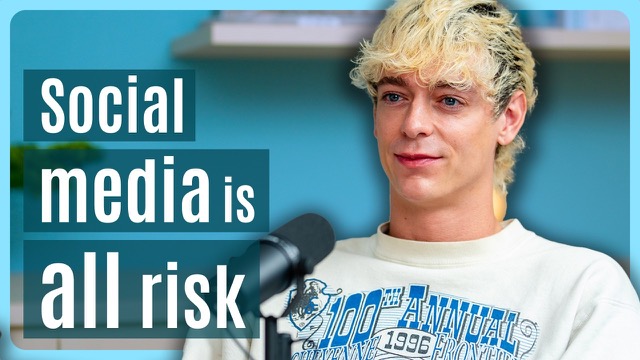
And social media, a lot of times, is a brand risk, being loud and different and unique. And all of those traits are what work on social media. That’s very antithetical to what Japanese companies want to do. They want to build slow, steady, reliable growth.
Tobi added that a company can’t know how a Reel will perform until it is posted, so it can’t measure clicks or cost per click ahead of time. Matt agreed: “That’s a major business issue in Japan.”
Data and Case Studies, or Personal Relationships
Matt described how his team approaches American companies:
With American business people, we show them case studies and sets of data to get them to sort of believe or trust based on history that it may go this way for them. So we do as much as we can to estimate.
And the Japanese side:
For Japanese businesses, there’s always an element of risk in business. That’s just what it is. And the more risk you accept, the more reward is potential. But Japanese businesses hate risk and they want to hedge it as much as possible. The way that Japanese people culturally hedge risk is personal relationship. The way that Americans hedge risk is data and background. That has been an extreme challenge.
He then said what that means for the data his team brings:
No one can tell the future. We don’t know if we can make amazing social media videos for you that perform insanely well for your business. We have the historical data. Japanese people are less trusting of that. They would rather get to know you personally and do business in the old style 1950s American way.
Relationships Built Over Decades
Later, Tobi asked how Matt is approaching relationships with Japanese companies. Matt began, “To be honest with you, I never know the right answer. I’ve considered so many different things.” He said his Meta background, which he expected to be a huge differentiator, “isn’t really” one in Japan (more on that in Marketing in Japan vs the US), and went on:
Japanese people and the way they organize relationships are often over decades and the way that people do businesses over decades. And I’ve had a lot of Japanese business mentors tell me that the appropriate strategy would be to operate on a very long time horizon.
He described how people who have built those relationships can “ask for shoukai in your network to be able to produce valuable business” (a shoukai is an introduction), and then gave his own view:
That is very slow for me. I still don’t know if that’s the right way. So I’m doing many different strategies at once. I’m talking to Japanese people. I’m meeting with CEOs. I’m talking to them about their business. I’m building personal relationships with people.
He was open about the part he finds hardest:
Which are often based on drinking, which I don’t exactly like doing as a business. As an American, or maybe this is just me, I’m very morally uncomfortable with winning business based on how much someone likes me rather than how good the merit of my work is. But that’s just how it’s done.
Learning Before Trying
The show’s host, Tobi, offered an example from how Japan adopted ChatGPT: a month or two after its release, Japanese bookstores filled with books on how to use it, while in the West few people would turn to a book about a tool that changes faster than the book can be read. Matt’s reading of that:
That’s an incredibly astute cultural observation. And there’s so much of that. Japanese people would much rather learn something before trying it and understand it deeply as a way to hedge risk, whether it’s studying English before speaking it. They often say that they’re not good at English, even though they are. Americans like to learn experientially. Just jump in and figure it out.
He added: “There’s not right or wrong. It’s just interesting.”
Reading the Air
Tobi asked which part of his map of Japan Matt is currently trying to build. Matt said, “Business is an incredibly complex map. And the personal relationships.” He described “so much complex calculus that people are doing,” which is “all being calculated silently,” and named one of the deepest metaphors of Japan, kuuki wo yomu, reading the air:
The American tendency is to fill the gap of silence in a conversation always. To not make the other person feel awkward. In Japan, they intentionally cultivate silence. And silence feels like negative space to Americans. But to Japanese people, there’s deep positive and various meaning in it. Someone told me that how they pause or how long they pause between ideas or answering a question can convey a tremendous amount of information about how they actually feel about something.
“They Won’t Tell You If You’re Correct”
When Tobi asked whether it is realistic for Westerners to really learn the unspoken rules Japanese people grow up with, Matt said mapping something perfectly is “a completely unattainable thing” and that “even Japanese people don’t have their own country mapped perfectly.” But, he said, “you can map a lot of it. And I find it to be a fun game.” He went on:
I think the key thing is if you want to make it work here, first of all, you can’t be weak. You must be strong and have a real reason for wanting to be here because it’s not easy. … But you need help. And so whether that’s a Japanese person or a foreigner who’s lived here for a long time or just a content creator or a book you read, whatever form you take it, you need help. … If you build a new piece of your map, you have to have a way of telling whether it’s correct or not. And the thing is, one of the fundamental rules of Japanese society, they won’t tell you if you’re correct or not. You often don’t get to find out. But you have to just do your best.
About Hanami Social
Hanami Social is a bilingual social media agency in Tokyo. Our team works in English and Japanese and helps American and other overseas companies with social media marketing for Japan, from the short-form videos to the automated follow-up that turns viewers into customers. For what Matt said about marketing and agency choice, read Marketing in Japan vs the US.
Frequently asked questions
Why are Japanese companies risk averse?
Matt Hannan, founder of Hanami Social, said on the Unpacking Japan podcast that Japanese businesses really dislike risk and want to build slow, steady, reliable growth. He said social media, a lot of times, is a brand risk, being loud and different and unique, that all of those traits are what work on social media, and that this is very antithetical to what Japanese companies want to do.
How do Japanese companies hedge risk compared with American companies?
In Matt Hannan's words, the way Japanese people culturally hedge risk is personal relationship, and the way Americans hedge risk is data and background. His team shows American business people case studies and data. Japanese businesses, he said, are less trusting of that and would rather get to know you personally.
How long do business relationships take in Japan?
Matt Hannan said Japanese people often organize relationships, and do business, over decades, and that Japanese business mentors have told him the appropriate strategy would be to operate on a very long time horizon. He added that this is very slow for him and that he still doesn't know if it is the right way.
What does reading the air mean in Japanese business?
Reading the air (kuuki wo yomu) is a Japanese expression that Matt Hannan called one of the deepest metaphors of Japan. He described one part of it: Americans tend to fill silence in a conversation, while in Japan people intentionally cultivate silence, and how long someone pauses before answering can convey a tremendous amount of information about how they actually feel.